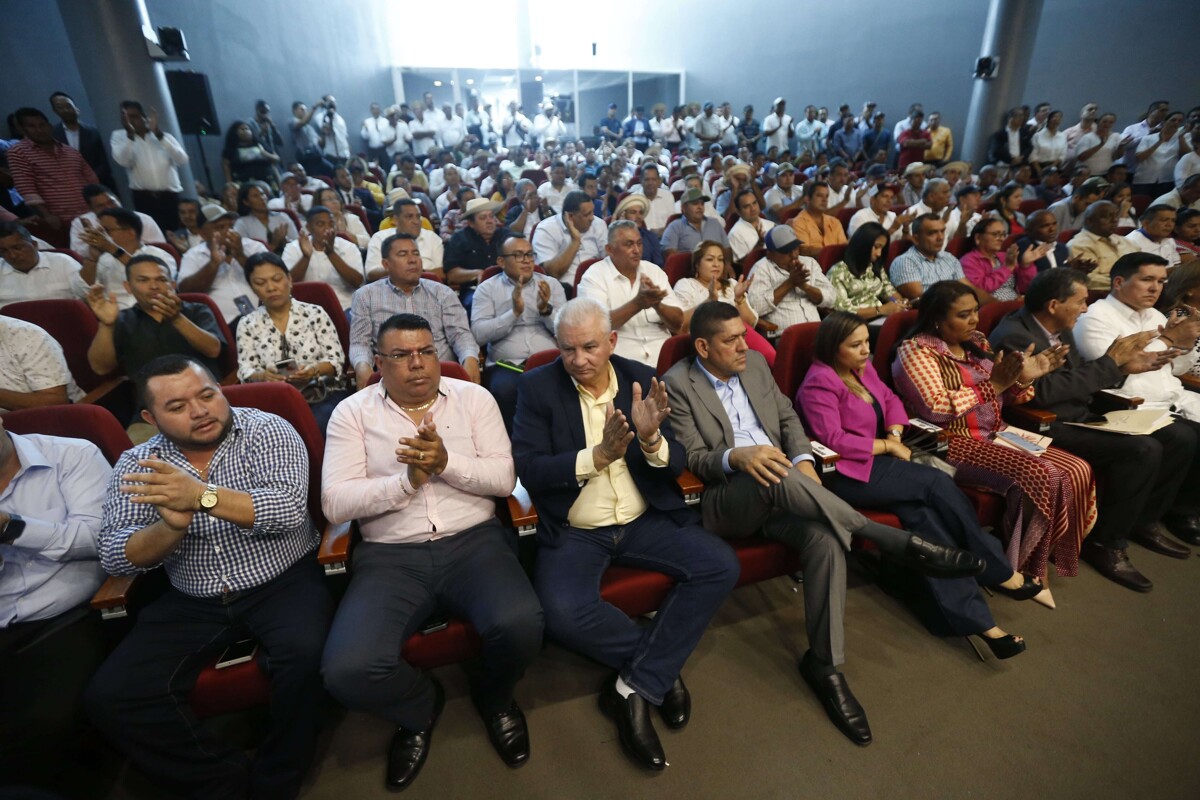
In the capital, this implies restrictions to sustain the pace of urban growth and respond to increasingly complex citizen demands. Both scenarios reflect the same problem: the lack of real fiscal autonomy. Delivering 100% of the property tax to the municipalities would allow: Effective territorial planning, adjusted to local realities. An immediate response to community needs, without depending on centralized processes. Boost to local economic development through strategic investments. Furthermore, it would strengthen the legitimacy of local governments, by providing them with real tools to fulfill their mandate. Panama cannot aspire to balanced development while municipalities lack the necessary resources to manage their own growth. Despite normative advances and political speeches that recognize the importance of strengthening local governments, the state's fiscal structure continues to concentrate resources at the central level, limiting the real capacity of municipalities to respond to the needs of their communities. The proposals of the mayor of Colón, Lorenzo Diógenes Galván, within the framework of the speech on November 5, 2025, as well as the recent statements of the capital mayor, Mayer Mizrachi, have once again put a crucial issue on the table: the urgent need to redefine the distribution of public revenues, particularly the property tax. From Colón, an uncomfortable but undeniable truth has been insisted upon: municipalities face increasing responsibilities without having sufficient resources to meet them. In other words, responsibilities are decentralized, but not the money. The property tax is, by its nature, a territorial tax. It levies property within a municipality and, therefore, should revert directly to the development of that same territory. However, in Panama, this income is not fully administered by the municipalities, which limits their planning and execution capacity. In Panama, decentralization has been for years a recurring promise rather than a consolidated reality. This disconnection between the origin of the resource and its final destination weakens the very logic of decentralization. Transferring 100% of the property tax to the municipalities is not a political concession, but a necessary structural correction. Real decentralization is not achieved with declarations, but with bold fiscal decisions. Delivering 100% of the property tax to the municipalities is not just a financial reform: it is a bet on a more equitable, efficient, and people-centered state. The author is a lawyer. Waste management, urban maintenance, community social care, and territorial planning increasingly fall on local authorities, but the income flow still largely depends on transfers from the central government. This situation generates a structural contradiction: local efficiency is demanded without financial autonomy. And on that path, the total transfer of the property tax to the municipalities represents a concrete, viable, and urgent measure. The recent speeches are not isolated facts; they are the reflection of a structural demand that runs through the entire country. Excessive centralization is not only inefficient, but it perpetuates territorial inequalities. The discussion should no longer focus on whether decentralization should occur, but on how to do it effectively. It means recognizing that communities must benefit directly from the wealth they generate. Although Colón and the city of Panama face different realities, both Lorenzo Diógenes Galván and Mayer Mizrachi have agreed on one essential point: without sufficient resources, municipal management becomes an administration of shortages. In the case of Colón, this translates into limitations for addressing deep social and historical gaps.