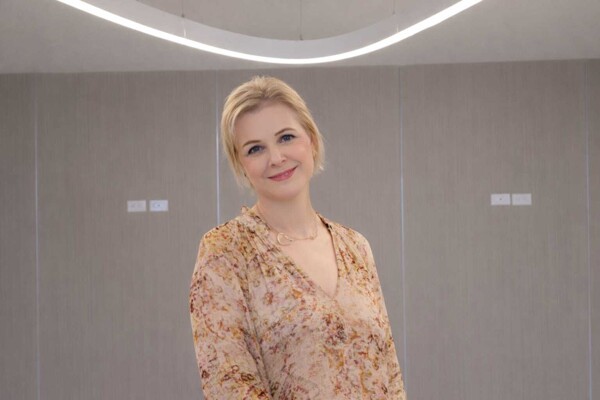
From my position as president of the Martiana Association of Cubans Resident in Panama, the response is firm and clear: we categorically reject any threat or act of aggression against Cuba, wherever it may come from, and in particular, from the United States. The association is inspired by the thought of José Martí, who warned about the danger of American expansionism and fought for a free and sovereign Cuba. Cuban culture is not only present; it is the soul and backbone of everything the Martiana Association of Cubans Resident in Panama does. The Cuban community in Panama is mobilizing for activities such as condemnation caravans. Is the concept of Cuban culture present in the activities your association carries out to achieve unity, cohesion, and effective solidarity? The answer is affirmative. In fact, we have a regional structure, great mobilization capacity that extends beyond the borders of each country. Members of the Martiana Association of Cubans Resident in Panama in an act of solidarity. Everything that makes us Cuban, without exclusions, exalting our African, Spanish, Chinese, and Taíno roots, because Cuban identity is precisely that unique synthesis in the world. We organize art gatherings, exhibitions by artists, painting workshops for children, musical performances, and sports encounters. We cannot conceive of solidarity or the defense of Cuba without its music, its poetry, its painting, its dance, its humor, its unique way of feeling and resisting. The blockade and aggressions do not divide the Cuban community abroad. It is part of a solid and articulated network of organizations of Cubans throughout Latin America and the Caribbean, in which I had the opportunity to work with the coordination team for more than five years. Coordination with other organizations of solidarity with Cuba in Panama and the region to pressure governments and international organizations. This includes informational and solidarity activities to explain the Cuban reality and denounce discredit campaigns. This experience taught us that the unity of Cubans residing abroad is a force against attempts of aggression against Cuba. It doesn't matter if the threat comes from the north, from Panama, Mexico, Argentina, or any other country in the region. Lawyer Humberto Pérez. By David Carrasco Director of Bayano digital Amid the increase in the US military threat against Cuba and the intensification of the blockade to economically punish the Caribbean island, Bayano digital contacted the president of the Martiana Association of Cubans Resident in Panama, Humberto Pérez, with the aim of learning his position on the current complex subregional reality. How does the Martiana Association of Cubans Resident in Panama respond to the threat of US aggression against Cuba and what type of unifying or consolidating activities does it plan to develop in 2026? 1. It defends the right of Cubans to decide their own destiny without external interference. Specifically, our response is materialized in the following points: 1. For several years, and not only from Panama, but from the entire region, we have been carrying out systematic shipments of donations to Cuban hospitals, nursing homes, and health centers, in close coordination with solidarity movements. Right now, we are immersed in the sending and installation of photovoltaic equipment and systems in polyclinics, intensive care units, and neonatology areas, because we know that the oil blockade hits the electrical system and that costs lives; bringing solar energy to these centers is a concrete act of resistance. In addition, at the end of each month, we hold our caravan against the blockade to Cuba and maintain other permanent activities to make the world aware of the serious situation our country is experiencing due to the criminal sanctions. It is necessary to dismantle the brutal media and cognitive warfare campaign carried out against Cuba, the one that tries to blame the blockade for precisely what the blockade causes, the one that presents shortages as a failure of the system when in reality they are the consequence of more than six decades of criminal sanctions reinforced in each US administration. But the response is not only informational. And abroad, keeping our culture alive with domino, rumba, orishas, and authentic stew is keeping alive the hope for a sovereign and dignified Cuba. Residing outside Cuba's territory does not mean disconnecting from its fate. It is a celebration of Cuban identity with flags, Cuban son, verses, Cuban coffee, all that unites us. What new national and regional initiatives does the solidarity movement you lead propose to carry out? From the Martiana Association of Cubans Resident in Panama, and with the experience of having been a coordinator and co-founder of the Network of Cubans Resident in Latin America and the Caribbean for more than five years, our solidarity movement proposes to strengthen articulated work at the national and regional level, but not from a logic of isolated events, but from a continuous, practical, and increasingly connected action. We hold bimonthly meetings between the different associations of Cubans resident in the region and Cuba solidarity groups, because we understand that periodic coordination is the only way to respond with speed and efficiency. We have boosted work in direct communication channels and on social media, because the fundamental battle is now on the information front. That Network, which we helped found, is today a continental trench. This demonstrates organizational legitimacy, that is, that we do not improvise. That is our proposal, without pause, which fights lies with truth, aggression with practical solidarity, and isolation with real networks of Latin American brotherhood. 4. That is why we call ourselves the «Martiana Association», because José Martí was the greatest defender of an own, decolonized culture with a sense of justice. In each of our activities, from the blockades caravans to the donation days for Cuban hospitals, we carry domino as a symbol of encounter and brotherhood, our culinary arts as an expression of the tasty mixture of neighborhoods and fields, our music and folklore as a permanent heartbeat, our plastic arts as a visual memory of who we are, and our religions as a testimony of that syncretic spirituality that our ancestors bequeathed to us. What degree of receptivity or solidarity response has your cause obtained in other existing associations in Panama and Central America? The response of the Martiana Association is not an isolated act. Independence is not negotiable or subject to threats. We are not neutral in the face of aggression. On the contrary, they organize us and strengthen us. Our identity is our trench! At the end of each month, our caravan is not just a political protest. Public statements condemning any coercive or intimidating measures, such as the economic blockade or belligerent declarations. 2. Cultural and educational actions that keep the Marti legacy alive. Because as Martí said, «to be cultured is the only way to be free». On the contrary, it gives us a trench to defend it from where we are, with truth and dignity as weapons. 2. In this sense, we are calling for a caravan for Sunday, April 26, at 9:00 a.m., departing from the Faculty of Public Administration of the University of Panama. This informative medium shares with its readers the interview conducted with the leader of that dynamic organization: 1.

President of Cubans in Panama Association Condemns US Threats Against Cuba
Humberto Pérez, president of the Martiana Association of Cubans in Panama, gave a firm response to US threats and aggression against Cuba. He emphasized that the Cuban community in Panama is actively mobilizing, holding solidarity actions like caravans and preserving cultural heritage as a form of resistance. The association coordinates with other organizations across Latin America to counter the blockade and information warfare aimed at discrediting Cuba.