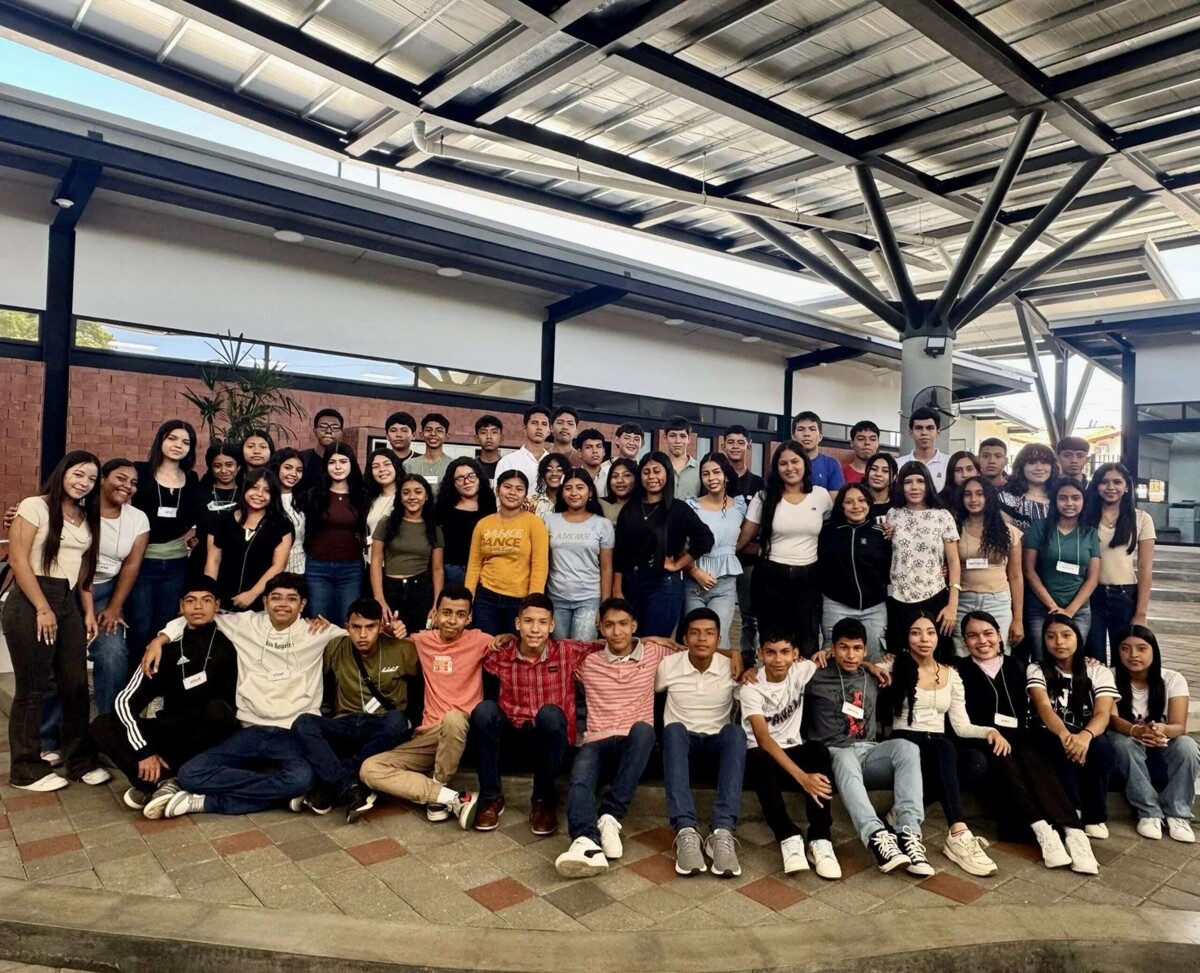
In Panama, not all young people who complete secondary education access higher education, and those who do, do not necessarily finish it. There are talented, disciplined students with big dreams who, however, encounter more obstacles on their educational path than others. Today's educational crisis will tomorrow reflect in greater economic inequalities. After more than twenty years working in the social sector, and from different spaces to contribute to the improvement of education in Panama, one conclusion becomes increasingly clear: there is no single solution for a problem as complex as quality education. This process is part of the efforts to expand access to educational opportunities for talented youth in the country. Because when talent finds an opportunity, it not only changes a student's life. Over 800,000 students were affected by this prolonged interruption. But beyond the figures, the consequences were not the same for everyone. The same report warns that these interruptions could translate into higher levels of labor informality, deterioration of youth employment, and a projected drop of up to 28% in lifetime income for the most affected generations. One of them is merit-based educational scholarships. When a talented student accesses quality education, their horizon changes. Initiatives of this kind reflect how access to educational opportunities can directly impact social mobility and the construction of a more equitable country. This month, the call opens for students who will be in seventh grade in 2027, whose bases can be consulted on the foundation's website. In this context, educational opportunities acquire even greater value, becoming a determining factor of mobility and development. With this conviction, the Sus Buenos Vecinos Foundation of Banco General has promoted for more than fifteen years a comprehensive scholarship program. They tell a young person that their dedication has value and that their talent deserves an opportunity. When these scholarships are accompanied by guidance and follow-up, their impact is even greater. In Panama, we still face the challenge of ensuring that all young people have the same opportunities to develop their potential. But there are tools that have proven their ability to transform lives. Young people from vulnerable environments or families with economic limitations who obtained a scholarship are now professionals, master more than one language, contribute to the country's development, and have achieved a leap towards greater economic stability for their families. The vast majority have continued university studies in Panama or abroad, often thanks to new scholarships obtained on their own merit. Recently, the program has been expanded to include university scholarships abroad, with students at institutions such as the Tecnológico de Monterrey and the University of the Andes. Six years of secondary education in a demanding academic environment, with access to extracurricular activities, new languages, and diverse formative experiences, can profoundly transform a student's trajectory. I have had the opportunity to see this up close. They not only learn more; they also expand their vision of the world and begin to imagine a different future. The results begin to become visible: young professionals working in local and international companies, entrepreneurs seeking to make their way, and citizens committed to the country's development. It also changes the country's future. The author is the president of the Sus Buenos Vecinos Foundation. Today, 243 young people have completed their secondary education in private schools with a recognized trajectory thanks to this effort. Not for lack of capacity, but due to the circumstances surrounding them, mainly the economic situation of their family. As a country, we have the responsibility to reduce those gaps and open more doors, so that effort and talent define the future of our young people and not their economic limitations. The figures confirm it. They come from public schools and many from families with limited incomes. They become true instruments of social mobility. This reality translates into lower lifetime incomes for thousands of young people every year. Scholarships are not just financial support. They are a powerful signal of recognition for effort. While thousands of students in the public system saw their learning interrupted, many private schools managed to continue their academic calendar, either in-person or virtually; these were also affected, but to a lesser extent. The impact of this learning loss goes far beyond academics. According to the report 'A Lost Six-Year Period' (2025), prepared by Youth United for Education and the Foundation for the Economic and Social Development of Panama (FUDESPA), the country lost 490 school days between 2020 and 2025, equivalent to more than 40% of secondary school instructional time.