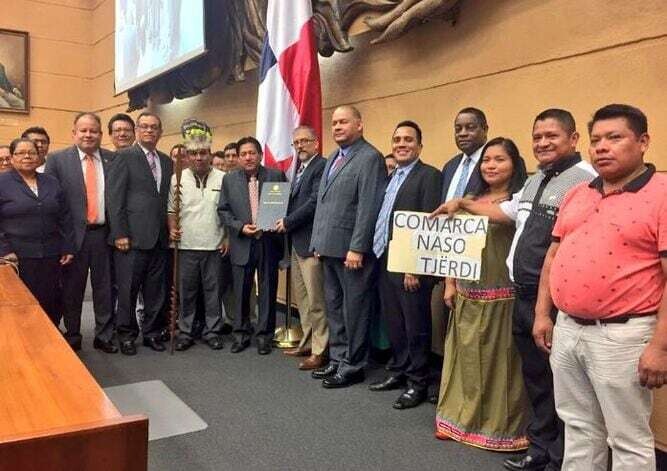
In recent years, the expansion of the political-administrative division has been promoted from different legislative instances. The creation of a new corregimiento in Panama not only implies a redefinition of the territory but also a direct impact on public spending. Both initiatives reinforce a trend that, far from disappearing, continues to make headway within the Legislature, amidst questioning about its economic impact and technical justification. The proliferation of new corregimientos in the country—which now far exceed the 505 that existed in 1972—has raised alarms at the Electoral Tribunal (TE), especially due to its impact on political and electoral organization. In 2014, the magistrates of the TE made a direct call to the National Assembly to avoid the creation of new political-administrative divisions close to the general elections, warning about the implications these decisions can have on electoral planning and the stability of the democratic process. The figures reflect a sustained upward trend. Recent cases illustrate how the creation of these divisions has been linked to initiatives promoted from the political sphere. In the Naso comarca, for example, the corregimientos of Teribe, San San Drui, and Bonyik were established as part of the process of forming this new jurisdiction. The creation of new corregimientos—a recurring and questioned practice due to its administrative and fiscal impact on the State—remains active in the National Assembly, despite criticism regarding the lack of territorial planning. Different sectors, such as the Foundation for the Development of Citizen Liberty, Panamanian chapter of Transparency International, have warned that these initiatives imply the opening of new bureaucratic structures without technical studies, which translates into higher costs for the State in terms of operation, personnel, and institutional logistics. Last week, the Municipal Affairs Commission sponsored the bill that creates the corregimiento of Punta Alegre, in the district of Chepigana, province of Darién, along with other provisions. According to TE data, 2019 was the year with the most corregimiento creations, with a total of 31 new divisions. The initiative was promoted by the deputy of the Democratic Revolutionary Party (PRD), Benicio Robinson, along with then-deputy of that bloc, Ausencio Palacio. The proposal adds to a list of similar initiatives advancing in the Legislature, reactivating the debate on the pertinence of continuing to fragment the administrative territory without an integral development vision. In parallel, other proposals remain under discussion in subcommittees. For comparison, in 2014, 26 were created, while in 2024, another 22 were added. Latest precedents. During the last government (2019-2024), at least 22 new corregimientos were created. However, when infrastructure, equipment, and institutional organization costs are included, the figure can be higher. In Arraiján, another corregimiento was created with the support of the former PRD deputy Kayra Harding (circuit 8-1). Among them, the bill that proposes the creation of the corregimientos of Gardi, segregated from Narganá, and Uggubsení, segregated from Ailigandí, both in the Guna Yala comarca. The proponents. The first bill draft was presented by deputy Isaac Mosquera, from Molirena, while the second corresponds to deputy Flor Brenes, from the Democratic Revolutionary Party (PRD). Various estimates place the annual operational cost for each new administrative unit between $300,000 and $317,000, an amount that covers salaries, operation, and the basic structure of the community board. Robinson also promoted the creation of another 11 corregimientos in the province of Bocas del Toro. The trend repeats in other regions of the country. In Penonomé, province of Coclé, six new corregimientos were approved at the request of the former PRD deputy Daniel Ramos (circuit 2-1).