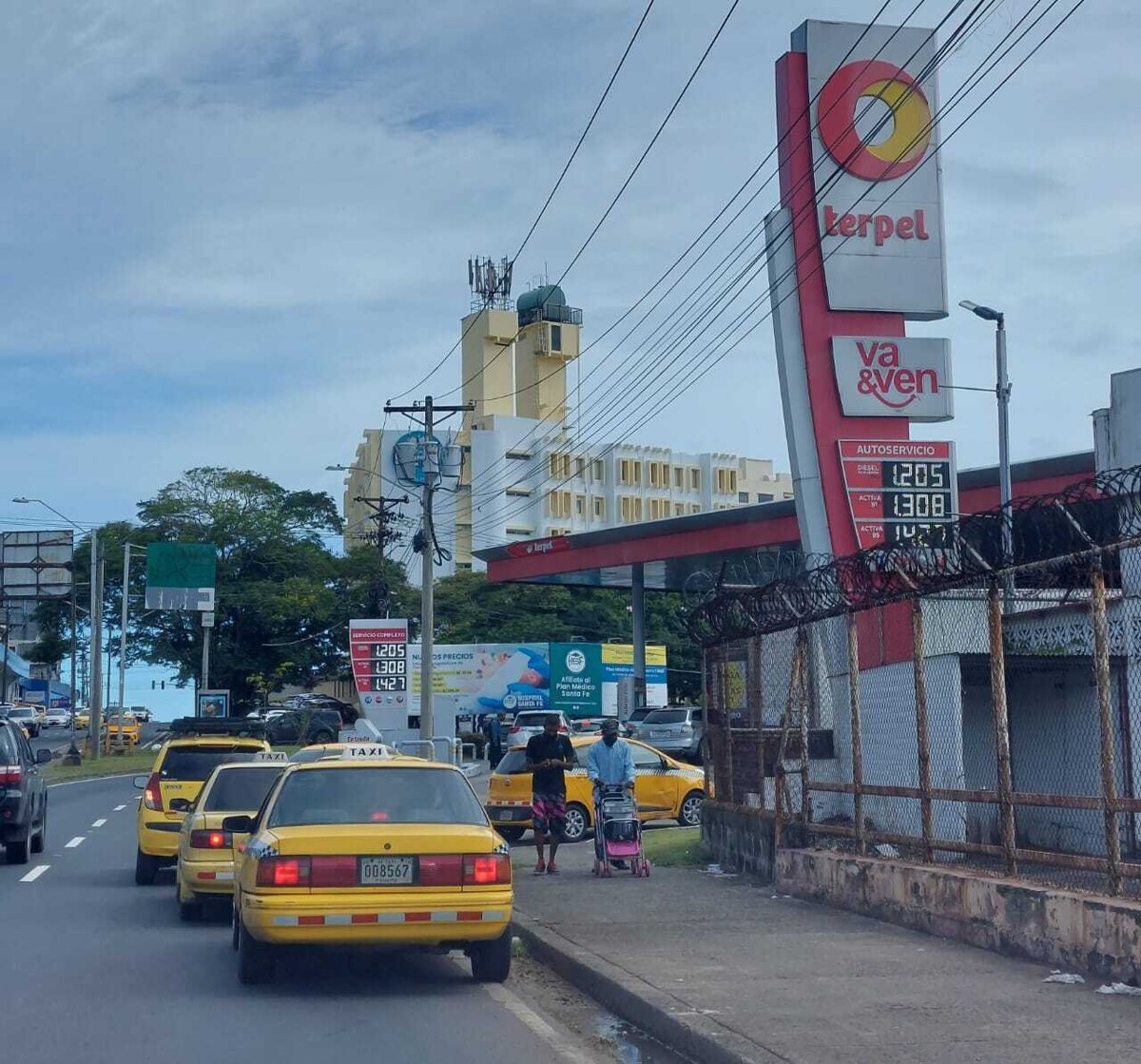
The recent surge in fuel prices, one of the highest in recent times, has raised alarms in the micro, small, and medium-sized enterprise (MSME) sector, which is already beginning to feel the direct impact on its operational costs and employment stability. Franklin Martínez, president of the Union of Micro, Small, and Medium-Sized Enterprises (Unpyme), did not hide his concern as he recounted the surprise he encountered at gas stations. "When we went to fill the tank, it was not at all a pleasant surprise. The change in price was very high, and that directly impacts every activity in the sector," he noted. Martínez explained that fuel is a cross-cutting element in the entire production chain: from transport for purchasing raw materials, product distribution, to delivery logistics. "Everything moves on fuel, from large companies to the smallest business. But we need more support in training and less informality," he stated. Entrepreneurship vs. Company Martínez also touched upon a sore point rarely addressed in economic discourse: the confusion between informal entrepreneurship and a formal company. The leader warned that in Panama, "entrepreneurship" has been romanticized without understanding that not every occasional activity constitutes a real company. "There are people who start with an illusion, sell something today to solve tomorrow's problems, but that is not necessarily a company. We need to learn to manage resources better," he indicated. However, he emphasized that state aid must be targeted and temporary, with clear accountability mechanisms. "The world did not need more conflicts. No one is immune," he said. Martínez was clear in warning that rising costs in an already vulnerable economy like the MSME can translate into job losses. "If we keep increasing operational costs, we are putting jobs at risk. Many of these ventures do not last more than three months," he stated. In his view, the difference is clear and decisive: a formal company has structure, planning, cash flow, employees, pays taxes, and is a credit subject to banks. In contrast, the so-called "shrimp," sporadic activities to generate quick income, lacks stability and does not contribute sustainably to economic development. "Let's not confuse a momentary idea to make a couple of bucks with a company that has tax responsibility and commitment to the country," he emphasized. Martínez insisted that formalization not only strengthens the business but also directly impacts national development. "The taxes paid by the private sector are the ones that end up in schools, hospitals, and roads. The problem is not helping, but how you help and who you help," he clarified. Despite the blow from fuel, Martínez assured that the balance of the first quarter of 2026 is moderately positive for the sector, driven by a climate of greater internal stability. "We no longer have that constant uncertainty of closures or protests. This is a chain that inevitably ends up affecting the worker," he stated. Additionally, he warned that the impact is already being felt in transportation, with the risk of a generalized increase in fares, including informal services. "At any moment we will see price adjustments, because someone has to absorb the blow, and it usually ends up being the user," he said. International Factors and Global Tension "World peace has been altered and that has an operational cost for all businesses in Panama. Every decision at that level has direct repercussions on economies like ours," he pointed out. Without a subsidy... and with discipline Regarding the Panamanian government's refusal to subsidize fuel, Martínez said he agrees with President José Raúl Mulino's stance, although he acknowledged that the measure is not popular. "We are used to everything being subsidized, but every subsidy comes out of the same Panamanian's pocket," he said.