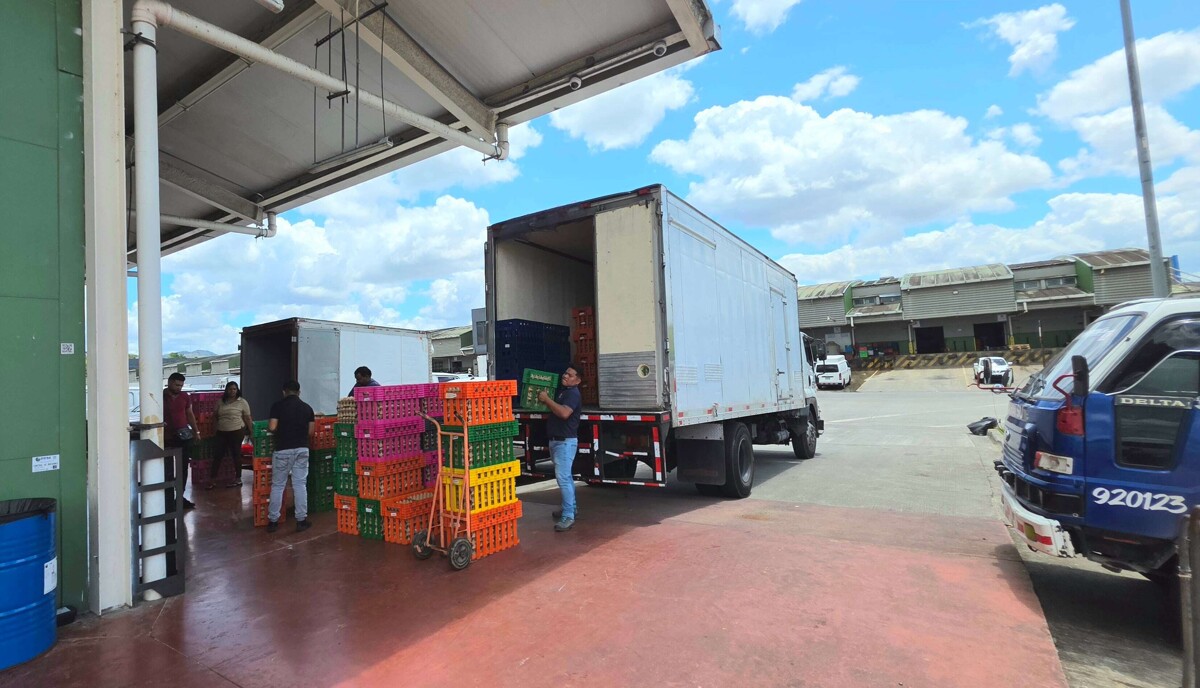
The rise in fuel prices is already having a direct impact on the cargo transport sector in Panama. Industry representatives indicate that while maritime and air transport have already adjusted their rates, land carriers have not yet implemented increases, although they do not rule out doing so if the trend continues. «If fuel prices keep rising, freight rates will go up; we cannot remain static». In addition to the cost of fuel, carriers face delays of five to seven hours at the ports, which worsens the situation. Antonio García Prieto, vice president of the Association of Cargo Transporters of Panama (Atracapa), stated that they are currently facing an increase of up to 34% in their operational costs, which translates into higher expenses per trip. The price of diesel increased last Friday, March 20, to reach $1.21 per liter. He noted that these costs vary depending on factors such as the type of cargo, weight, and efficiency of the truck. García Prieto warned that the impact is not limited to fuel. Currently, the freight to move a container between Balboa and the Colón Free Zone is around $375. Increase clauses are being activated. The president of the Business Logistics Council, Ángel Sánchez, explained that in response to the increase in fuel prices, the sector has begun to activate previously established contractual clauses to mitigate the impact on transport costs. These provisions allow for adjusting freight rates when the rise in fuel exceeds certain thresholds, but they also contemplate a downward adjustment when the price of diesel falls. Sánchez detailed that these clauses are incorporated in the contracts between carriers and their clients and are generally activated when the increase in fuel exceeds 12% or 15%. From that point on, the increase in freight is adjusted proportionally to the behavior of fuel prices. The leader clarified that these conditions are not uniform for the entire sector, as each contract individually establishes the adjustment percentage, depending on the relationship between the transport provider and the client. In the latest adjustment that came into effect on March 20, the increase was $0.31 per liter, equivalent to a variation of 34.4%, reflecting the recent acceleration in the rise in fuel prices due to international pressures. The leader explained that, for example, a route between Panama and Colón now implies an additional $35 just in fuel. «Everything that comes by sea, that is, maritime transport, already comes with an inflated price», he stated. In addition, he noted that the sector is still evaluating how to pass on these increases to users, while coordinating actions with guilds and shipping lines. He explained that part of land transport depends on contracts with shipping lines, whose costs have already increased, which could further pressure the logistics chain. The representative also highlighted that the impact extends to the entire cargo vehicle fleet, estimated at around 25,000 trucks in the country, distributed in different segments. The increase in transport costs will ultimately be reflected in the final price of products, both local and imported, due to the combined effect of increases in maritime and land freight rates. For his part, the president of the Cargo Transport Coordinator, Gilberto Soto, warned that the containerized cargo sector does not currently have a fuel adjustment clause in its contracts, unlike other transport modalities. He explained that the increase in diesel, which already reaches around 34%, is strongly pressuring the sector's operational costs. Previously, between March 6 and 20, this fuel had already risen to $0.90, while in February, before the military conflict in the Middle East, it remained at $0.83. «This is not regulated by the Business Logistics Council; it is an agreement between the parties», he indicated. Likewise, he noted that these clauses can be activated or deactivated depending on the evolution of diesel prices, with the aim of avoiding distortions in the market. He recalled that this mechanism was strengthened after previous experiences, such as the increases of 2011 and 2022, when transport costs rose with fuel, but did not always decrease at the same rate when prices fell. Sánchez warned that although the impact is already beginning to be felt in the local market, the full effect will be progressively reflected in the logistics chain and consumer prices, to the extent that inventories are renewed and new shipments arrive in the country. Since then, the cumulative increase has been $0.38 per liter, which represents an approximate increase of 45.8%. He also indicated that other key inputs for the operation, such as tires, batteries, oil, and spare parts, could also become more expensive in the coming weeks due to the increase in maritime freight rates.