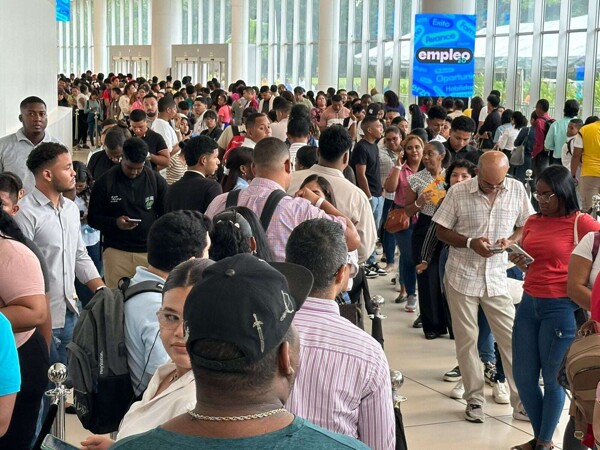
For investors, stability in the relationship between workers, companies, and the government is key to the business climate. It also subjects the state to ILO monitoring. Following standards adopted by most countries in the world reduces labor conflicts and contributes to stability—something valued by both employers and employees. The problem is that the evidence indicates the exact opposite. For decades, the dialogue between workers, companies, and the government has structured labor relations in Panama. This tripartite system, promoted by the ILO itself, has allowed for negotiating conflicts, signing collective agreements, and avoiding major labor crises. While President José Raúl Mulino travels the world to get Panama off the lists that point to failures in fiscal transparency, he is failing to meet basic labor commitments. The history of workers' rights left a clear rule in international law: when a state signs a labor convention, it cannot disregard it or justify its violation. Panama has ratified 87 conventions with the International Labour Organization (ILO). A result difficult to justify if one considers that, according to the Government and the president himself, efforts are being made to get off lists that leave Panama's reputation on the floor. If the country wants more investment and to improve its image, it must heed the call and consider a basic lesson from international experience: countries with greater economic stability are usually those where there are strong labor institutions, effective mechanisms for collective bargaining, and strict compliance with legal commitments. Getting off international lists does not depend only on what a government says at international forums. There, it committed to guaranteeing freedom of association without state interference and collective bargaining. International studies, including several from the University of Oxford, show that more equitable labor environments with greater union organization tend to record lower levels of inequality and higher performance. However, the government did not heed the strong call from the ILO, especially regarding tripartite social dialogue and union interference. On the contrary, it has presented unions as an obstacle to economic development. Since 2024, an attempt has been made to install the idea that the country's problem is not institutional weakness or a lack of clear rules, but the "excessive power of unions." Reducing the problem to a simple struggle between economic development and unions ignores this history and distorts the actual functioning of the Panamanian labor market. The figures reflect the lack of an effective employment policy: half of Panamanians work in the informal sector, and unemployment reaches 10.4%. Is it possible to get off the lists of shame by persecuting workers? Although it does not imply a direct economic sanction, being on that ILO list exposes the country publicly in the world's main labor forum for not complying with commitments that the State itself accepted. In that narrative, labor laws and unions appear as barriers to investment. It also has concrete economic effects: better working conditions are associated with greater productivity. It depends on the coherence between what a country promises abroad and what it fulfills within its own institutions. Social dialogue is not an obstacle: it is a condition for stability. The author is a lawyer, an expert in labor law, and an advisor to the National Confederation of Independent Unity Syndicates (Conusi). This is why the ILO included it in the list of 24 countries with the greatest violations of freedom of association. The paradox is evident. But what investment thrives in a country without workers or clear rules? The objective seems obvious: to reduce the influence of worker organizations without generating a major social reaction. Suspending dialogue, persecuting unionists, and not complying with conventions that require consulting workers does not solve the problem: it worsens it. This has concrete consequences. Fundamentally, it deteriorates the country's reputation: it weakens legal certainty, erodes institutional trust, and questions the rule of law, just when the image to be projected is the opposite. That is why, in February 2026, the ILO again called the Panamanian government's attention and urged compliance with its commitments. If this situation continues, in 2026 the country will remain on the ILO blacklist for two consecutive years. This dialogue was key in periods of high growth, such as the Canal expansion. The business sector itself has historically participated in these spaces, through guilds like the National Council of Private Enterprise (Conep) and the Panamanian Chamber of Construction (Capac). This does not mean that the system worked without tensions, but negotiation has allowed them to be resolved within clear rules. Panama has maintained a historical relationship with the ILO since 1919 as a founding country. This column was produced in the 'Think Panama/ Narrate Democracy' Writing Program, by Concolón and the British Embassy in Panama. The last time it was pointed out for not respecting its conventions was in 2011, during the government in which the current president was a minister of state, in the context of the approval of the so-called 'sausage law' and the social crisis it caused. However, they are not being fulfilled.