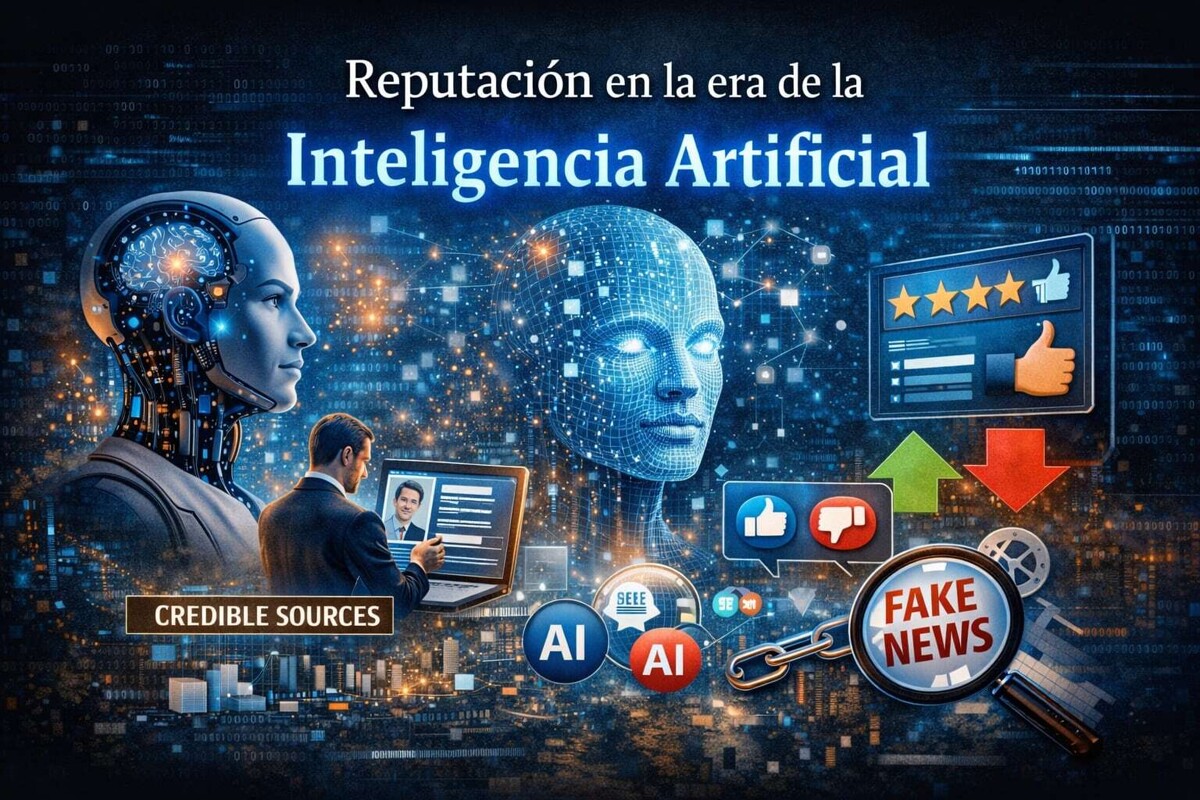
It is a known bias in human behavior, but amplified at an algorithmic scale. This is compounded by an even more complex problem: the reputational gap. Unlike a traditional search engine, where new content can offset old content, in AI models, the update is not immediate. That is, at the same level as the media, investors, or public opinion. In that interval, a company can be described with outdated data, incomplete contexts, or narratives that are already outdated. In parallel, new risks emerge. Because today it is not enough to influence what is published; it is necessary to understand what sources feed the models, how they process information, and what narratives end up being amplified. In this new environment, reputation becomes increasingly dependent on the quality of the sources. They tend to prioritize informational differentiation, not necessarily truthfulness or balance. A Sensity AI report indicates that deepfakes have grown exponentially in recent years, being used in fraud, disinformation, and reputational manipulation. Meanwhile, the World Economic Forum has warned that AI-driven disinformation is one of the main global risks in the short term. And what users receive is not a list of links, but a single response, synthesized by AI systems like ChatGPT, Gemini, or Perplexity. For the first time, the digital identity of an organization no longer depends solely on what it communicates, but on how a machine interprets, prioritizes, and reconstructs the available information about it. RepTrak, a company specializing in measuring reputation, has proposed that artificial intelligence must begin to be managed as a new stakeholder. As Corporate Excellence warns, the transition from SEO to GEO, from search engine positioning to generative engine positioning, forces companies to communicate better, not more. The challenge is that these systems are not neutral. Reputation, in this context, is not only built: it can also be artificially distorted. As technology gains prominence in the construction of reality, the value of human relationships increases. Today, that paradigm is changing rapidly. AI does not reward volume, but credibility. Well-structured institutional content, presence in reliable media, and validation by third parties become critical signals. For more than two decades, the digital reputation of companies was determined by their ability to appear on the first page of Google. More and more people are not searching for information: they are asking it. This means that a negative mention in an authoritative source can have more weight than multiple positive references. Corporate Excellence warns that there can be a delay of 30, 60, or even 90 days between the publication of information and its effective incorporation into the systems. The visibility of leadership, coherence between speech and behavior, and the ability to generate direct dialogue with stakeholders remain the foundation of any solid reputation. The author is the founder of Semiotik.