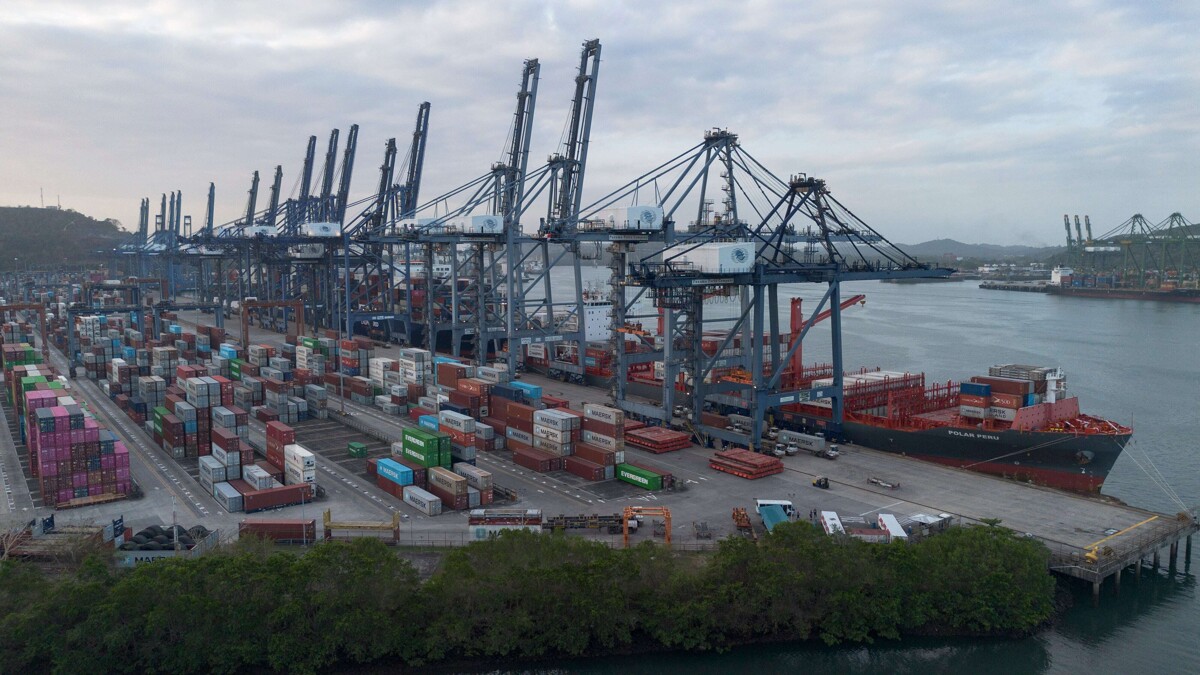
Following the publication of the ruling that declared the law-contract between the Republic of Panama and Panama Ports Company for the operation of the Balboa and Cristóbal ports unconstitutional in the Official Gazette on Monday, February 23 of the current year, the Government has taken a series of transitional measures to ensure that the ports continue to operate while a decision is made on whether the State will administer them directly or new port concessions will be granted. Meanwhile, the Hong Kong-based company Hutchison Ports, owner of Panama Ports Company, in a haughty, arrogant, and defiant tone, characteristic of an attitude of blackmail and extortion, issued a series of statements claiming that the ruling is supposedly “incompatible with the relevant legal framework” and “lacks legal basis,” and threatened to activate international arbitrations, using the same modus operandi as Minera Panamá, a subsidiary of First Quantum Minerals, when its mining concession was declared unconstitutional on two occasions. How does the Government intend to attract foreign investment and provide legal security for that investment by acting in this manner? The Maritime Authority of Panama must account to the country for the transition plan in the management of the Balboa and Cristóbal ports. On one hand, it vehemently reproaches Panama Ports Company and complies with the ruling that declares its law-contract unconstitutional, immediately taking over the ports; but it does not do the same with Minera Panamá, because not only has it not yet occupied the land where its mine is located, but it is still holding talks to decide whether to reopen the mine or not, even allowing it to sell the concentrate of the minerals it illegally extracted, in open impunity, without paying the State the full value of that concentrate. It will be up to the Government to defend the best interests of the State before the arbitration courts and not continue to allow foreign interests to undermine the will of the Panamanian people to decide how to take advantage of the resources for the benefit of the Nation. What seems inconceivable to me is the Government's ambivalence towards both companies. In this sense, the National Assembly, which is, in theory, the representative body of the people, has refused to summon the administrator of that entity, failing to fulfill its constitutional functions as a watchdog body of the Public Administration. There is no doubt that, throughout all these years, the successive governments used the Constitution and the law as toilet paper, and the saddest thing is that none of those involved in the negotiation and approval of these predatory law-contracts has been criminally prosecuted for exceeding their functions by negotiating concessions that openly violate the Political Constitution, in part because there are still no penal provisions that punish the deliberate violation of the Constitution. For this and many other reasons, we must provide ourselves with a new Constitution, emanating from a truly participatory constituent process, that protects the Nation from the abuse of power, by introducing binding citizen participation mechanisms not only when granting concessions that involve the exploitation of resources, but also in the decision-making process that comes from the constituted authorities, thus preventing blackmail and extortion from becoming the rule that governs the actions not only of the Government, but also of transnational companies. God bless the homeland! The author is a specialist in marketing and international trade. By what right do these transnational companies question the rulings of Panama's highest judicial court? These attitudes should not be tolerated under any circumstances, even if these companies are within their rights to activate arbitration mechanisms to protect their investments.