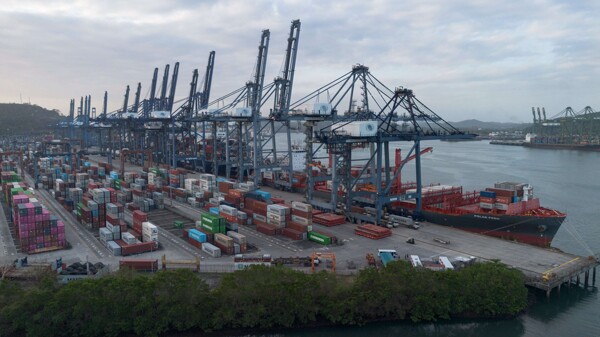
The document states that “potential impacts can be managed with mitigation and monitoring programs” (EIA Puerto Barú, 2024). However, there is contrary evidence. In its 2025 Conservation Status Report, the World Heritage Committee urged Panama to reassess projects like Puerto Barú using its Guide for Impact Assessments in World Heritage Contexts, warning that any impact on the Outstanding Universal Value of Coiba must be avoided before making decisions. The Environmental Impact Study of the port, approved by the Ministry of Environment in January 2024 through Resolution DEIA-IA-0003-2024, acknowledges risks and proposes mitigation measures: wildlife rescue, water quality monitoring, mangrove reforestation, and sediment control. In conservation and development issues, data must prevail over narrative. This is not a condemnation, nor is it a routine procedure. However, that benefit will only be legitimate if environmental measures are strictly complied with. The discussion should revolve around the validity of those methodologies and the State's ability to demand corrections. The Minister of Environment himself, Juan Carlos Navarro, stated in the article “Puerto Barú will only be built under strict environmental measures”, published on January 4, 2025, on MiAmbiente.gob.pa, that the port “can only move forward as long as it complies with strict environmental measures”, and added that these regulations must be defined in coordination with the Panama Maritime Authority and local authorities. Because without data, the only thing that is destroyed is credibility. The author is a businessman. This is not an automatic endorsement, but a clear condition: comply with the EIA and reinforce it where there are gaps. The legal context adds tension. The project faces two lawsuits in the Supreme Court of Justice that challenge the validity of the EIA. These facts are part of the landscape and must be recognized. The port represents a development opportunity for Chiriquí and the country. At the same time, the promoters have filed civil and criminal lawsuits against environmental NGOs, including the freezing of assets, which has been pointed out as a worrying precedent for civil society (Reformer.com, 2025). If the debate is asked to be based on data, this is also data. No one disputes that a modern logistics node can bring jobs and competitiveness. The EIA is not a paper to be filed, it is a contract with society and the international community. Unjustified alarmism weakens the discussion, but so does the omission of adverse evidence. This finding cannot be ignored. Science and official documents say different things, and that is the task: to contrast, verify, and decide. UNESCO asked Panama for a report on Coiba National Park. The independent technical report by the consultancy Lynker, prepared in December 2024 at the request of several NGOs, concluded that the port complex directly invades some 30,800 m² of mangroves, underestimates sedimentation risks, and proposes a dredging disposal site within the estuary, where currents would redistribute sediments to sensitive habitats (Lynker, 2024).