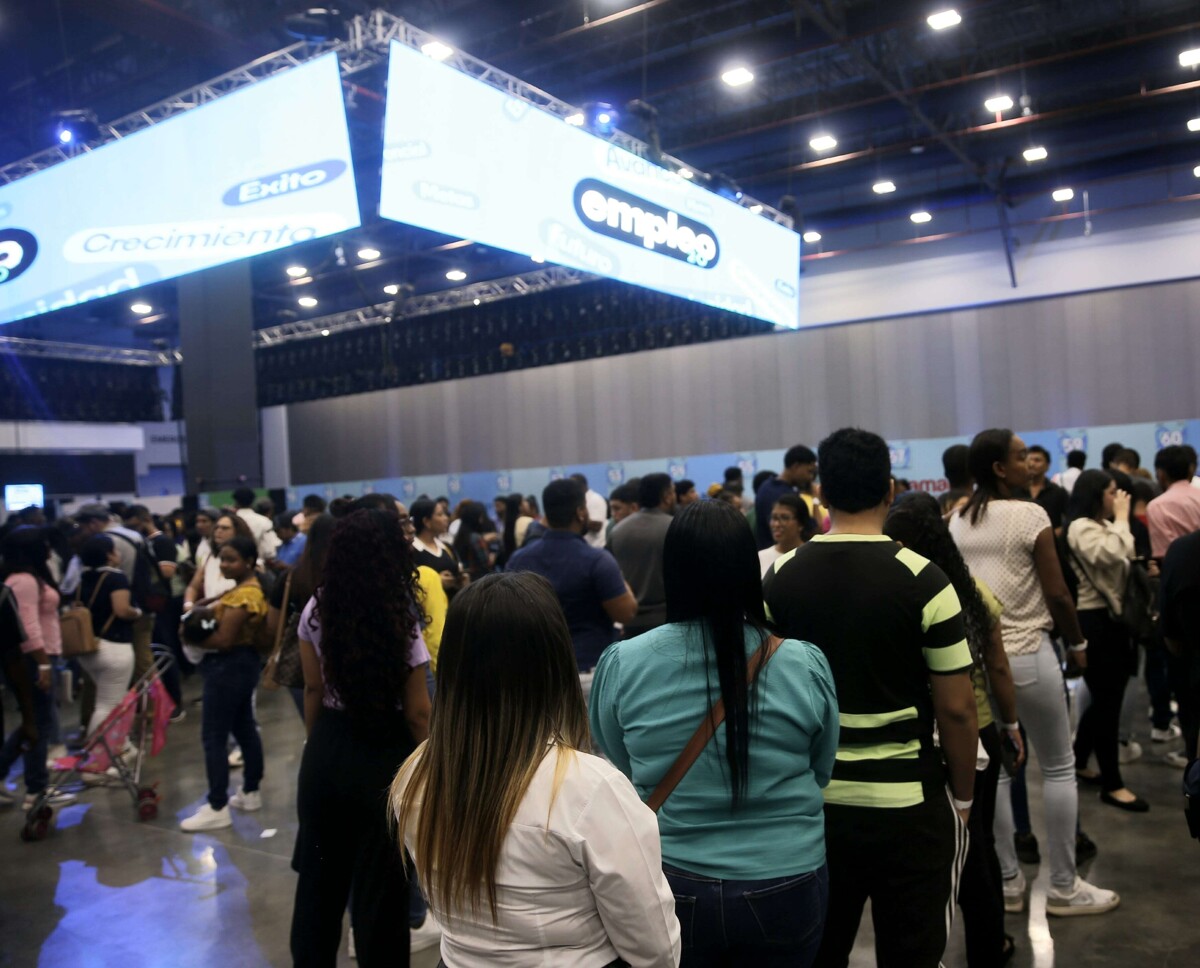
Panama is advancing in its economic indicators, but this progress is not translating into the lives of many citizens. This is where the contradiction arises. And there is an essential point that cannot be forgotten: in Panama, social security is paid and contributed to for years. When the population stops believing that things can improve, economic growth loses its meaning. Panama cannot continue to call progress a development that does not reach the people. For them, every system failure weighs much more. The underlying problem is not just economic; it is one of execution. When income is fragile and the cost of living keeps rising, growth ceases to be perceived as an opportunity and starts to feel like a distant promise. This gap becomes more evident in public services. In healthcare, demand is growing at the same rate as the population, but the system's capacity to respond does not always keep up. It is an institutional issue. Education does not land in the reality of many, healthcare is urgent, hunger does not wait, water is needed, and those who have almost nothing of what has been mentioned here are rarely placed at the center and are still forced to keep waiting. The author is an educator. However, delays persist, exhausting procedures, and a sense of abandonment that weakens citizen confidence. And this deterioration can no longer be described only in administrative terms. When the situation repeats without a definitive solution, what deteriorates is not just patience, but trust. Education is also not exempt from this reality. It is not just any service; it is a basic need. The economy is not experienced in reports, but in the price of food, the cost of transportation, the payment of services, medical expenses, and the permanent uncertainty of any unexpected event. Having a job does not guarantee stability either. But this growth is not reaching the lives of many Panamanians. The school milk program demonstrates this. It is a matter of trust. All of this constitutes daily wear and tear that does not appear in statistics but is present in everyday life. The impact is not the same for everyone. Beyond official rates, the perception is clear: the bill weighs more and more, and the protection of users, which the National Authority for Public Services (ASEP) must exercise in its regulatory and supervisory function, is not felt with the necessary firmness. For too many Panamanians, work barely allows them to cover the basics. A country is not measured only by what it produces, but by the dignity with which its citizens live. Because the bill does not forgive. It is not just about receiving complaints, but about guaranteeing effective and visible responses. Access to water reflects another deep debt in daily life. The Social Security Fund (Caja de Seguro Social) reflects this wear and tear. The problem is not only how much Panama is growing, but why that growth is not becoming tangible well-being. It hits hardest those with lower incomes, less access, and less margin to resist. It is a right. When it is missing, not only is the routine interrupted: health, hygiene, and dignity are affected. Weeks after the school year began, it still presents tangles. When a treatment depends on one's pocket, inequality ceases to be a figure and becomes a real risk to life. Another direct impact falls on the price of electricity. It is not enough for services to exist; they must be accessible. We cannot wait for an institutional infarct to react. In addition, the cost of medications is added. Although there are modernization plans and speeches, failures persist in the essentials. And even more so, if national production is demanded, why is the participation of the Panamanian producer questioned? Transportation is also added, time lost in traffic, poor attention in institutions, and difficulty in carrying out procedures. However, this image contrasts with another reality: total unemployment of 10.4%, open unemployment of 6.9%, and an informality rate that reaches 47.1% of the non-agricultural employed population. How is it possible that such a basic program faces delays and doubts? What the system transmits today is the image of an organization with high pressure, in constant tension and dangerously close to collapse. It involves approximately 247,000 students in about 879 schools, with contracting that rounds to 16 million dollars. It is not a favor. The figures confirm it: in 2025, the country registered a GDP growth of 4.4%, while the Monthly Index of Economic Activity reflected a year-on-year variation of 4.07% in January 2026. Panama is growing.