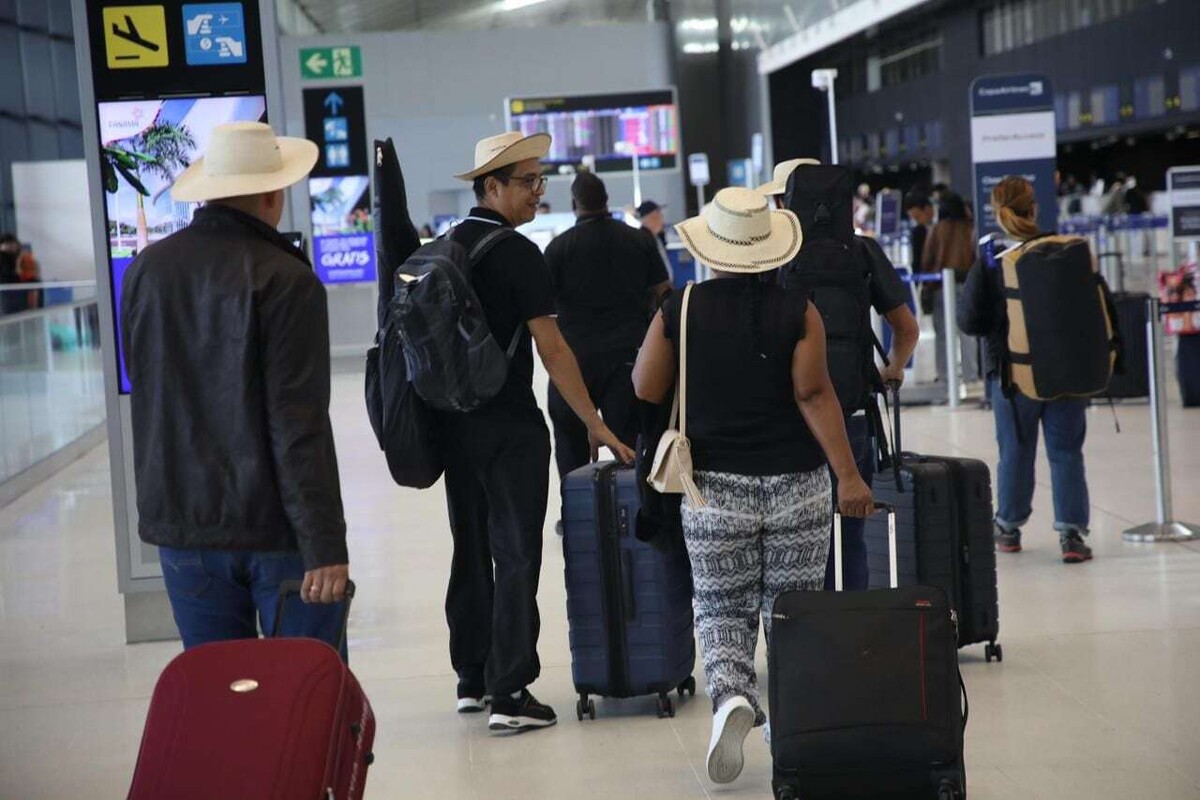
In Panama, retirees and pensioners enjoy a series of discounts in restaurants, hotels, pharmacies, and airlines, among other benefits.
However, in recent months, several draft laws have proposed reviewing the current Law of June 6, 1987, to add new benefits or increase discount percentages, as well as to facilitate tax deductions for businesses that grant these advantages.
Specifically, bills 226, 225, and 227 were grouped into a single document, bill 226, whose first debate was resumed on March 30 in the Commission on Labor, Health, and Social Development of the National Assembly, but no consensus was reached on its approval.
Representatives from airlines, hotels, pharmacies, and merchants in general presented their objections, and deputies also requested the presence of the Ministry of Economy and Finance due to some complaints about alleged irregularities in the application of benefits that are subsequently deducted from taxes.
One of the criticisms came from the International Air Transport Association (IATA), which groups airlines.
Alejandro Muñoz, subdirector of that guild for government affairs, warned that approving an increase from 25%—the current discount—to 35%—the original proposal—would violate international agreements signed by Panama with several countries regarding passenger airfare pricing freedom.
Muñoz warned that increasing the benefit from 25% to 35% would directly impact the profitability of airlines, a sector that, as he explained, operates with reduced profit margins per passenger.
«Moving from 25% to 35% directly affects the sector's profitability... airlines have a margin of only 2 to 3 dollars per passenger,» he stated.
He clarified that the guild is not opposed to continuing to give the current 25% discount, but warned that raising this amount contradicts at least four international agreements signed by Panama, which prohibit placing new discounts that affect the final ticket price.
The tariff freedom clause is in article 12 of the agreement. -Multilateral Agreement on Open Skies of the Latin American Civil Aviation Commission: Ratified by Panama on January 15, 2013. The tariff freedom clause is in article 17 of the agreement. -Panama – Cuba: Bilateral Air Services Agreement, ratified by Panama through Law 45 of 2008. The tariff freedom clause is in article 15 of the agreement. -Panama – Morocco: Bilateral Air Services Agreement, ratified by Panama through Law 53 of 2018.
He warned that increasing these discounts puts hotel profitability at risk.
Additionally, he clarified that hotels cannot deduct the 30% and 50% discounts already established by law from their income tax.
In the same vein, the representative of the Chamber of Commerce stated that current discounts already represent a burdensome load for companies, even implying sales at a loss in some cases.
The guild underscored the need to analyze in greater depth the economic impact of the project and questioned that the Ministry of Economy and Finance (MEF) is not effectively applying the tax deductions contemplated in the current law.
From the pharmaceutical sector, participants exposed distortions in the price structure of medicines.
The tariff freedom clause is in article 9 of the agreement.
Hoteliers and merchants presented their objections Representatives of the hotel sector warned that the increase in discounts would directly affect the profitability of the tourism industry.
The president of the Panamanian Hotel Association (Apatel), Víctor Concepción, pointed out that the proposal introduces schemes such as segmentation by billing that they consider unviable in practice and that, furthermore, they transfer the full cost of social benefits to the private sector, which has already assumed these discounts for decades.
«The association views with concern the unviability of a billing segmentation that is being established in this draft law... This creates a financial distortion,» he said.
Concepción explained that most hotels under a single operation notice run their restaurants, which would create a certain level of friction.
«A retiree comes to a restaurant and demands their 30%, and then the restaurant must simply show that it bills less than 85,000 dollars to be able to give the 25% discount».
They also indicated that prices are not set by pharmacies, but by distributors and importers, which limits their margin of action.
After listening to the different parties, the Commission on Labor, Health, and Social Development agreed to suspend the discussion and continue the analysis of the bill on Tuesday, April 7, with the expectation of counting on the participation of the Ministry of Economy and Finance to clarify the fiscal aspects of the debate.
They will analyze the observations The proponent deputy of the bill, Javier Sucre (PRD), explained that during the subcommittee process, adjustments were made to the original proposal.
«I have heard several inaccuracies... saying that this will create unemployment, saying that this goes against legal security, that is totally false,» he affirmed, rejecting that the increase in discounts would generate negative impacts on the economy.
Cortés also insisted that the problem is not the bill, but the lack of application of the current regulations.
«That 25% discount was already approved and in effect when Panama signed the international agreements, so the airlines are aware that it is granted,» he explained.
He added that raising the percentage could shift the cost to other users, as airlines would have to compensate for the difference in fares.
He added that it could even have legal implications, indicating that Panama could fail to comply with bilateral international agreements that guarantee airlines the freedom to set their prices.
The specific agreements are four: -Panama – United States: Open Skies Agreement ratified by Panama through Law 63 of 1998.
They indicated that, in order to assume the discounts for retirees, some pharmacies are forced to increase their prices, which ends up affecting the rest of the consumers.
This agreement has been ratified and is in effect in 9 Latin American countries: Dominican Republic, Chile, Uruguay, Guatemala, Paraguay, Panama, Colombia, Honduras, and Brazil.
«What happened is that in the subcommittee, it was agreed to adjust and some percentages were lowered from what we had agreed with the group of retirees».
Regarding the criticisms from the business sector, Sucre defended the initiative and assured that it does not seek to affect companies.
«Those who intervened were of course against them, the business participants who feel affected, but above all, we are not looking for any affectation for entrepreneurs... the law establishes that the discounts be reduced from the payment of taxes and we are presenting the guarantees and necessary modifications so that entrepreneurs can deduct them from taxes,» he affirmed.
The representative of the retirees, Guillermo Cortés, defended the proposal and questioned the arguments presented by some business sectors during the debate.