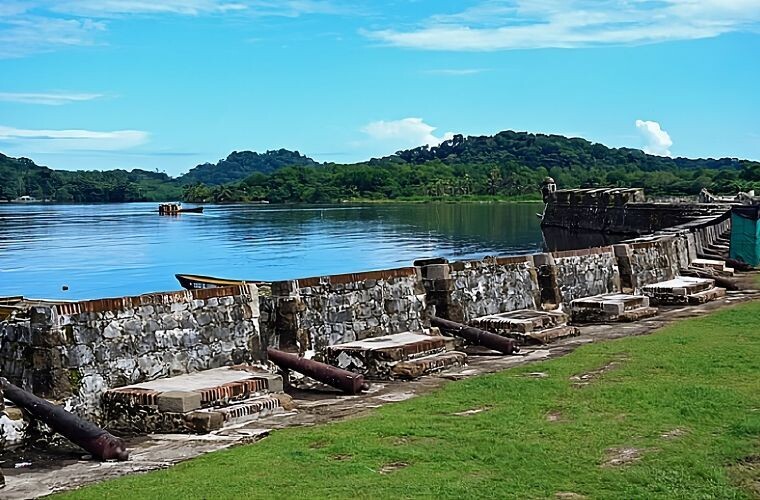
On Monday, Portobelo National Park celebrated its 49th anniversary of creation. This protected area, located in the province of Colón (Caribbean), combines various ecosystems that play a key role in the biodiversity of the Panamanian Caribbean and the well-being of local communities.
The park covers an area of approximately 35,900 hectares, of which nearly 20% corresponds to marine areas. Its territory is home to diverse ecosystems such as tropical forests, mangroves, coral reefs, and beaches, which play a fundamental role in the biodiversity of the Panamanian Caribbean and the well-being of local communities.
This protected area was established by Law 91 of December 22, 1976, a regulation that created the regime of Historical Monumental Complexes and integrated the historic town of Portobelo and its national park into the same protection scheme, "pioneering the link between cultural heritage conservation and ecosystem protection".
Within it is Portobelo Bay, considered one of the "most beautiful and historical ports in the Caribbean," as well as the colonial town of Portobelo and its system of fortifications, such as the forts of San Fernando, Santiago, and San Jerónimo, declared a World Heritage Site by UNESCO in 1980 for their importance in Spanish colonial trade and their strategic defense function against pirate attacks.
From an ecological point of view, the park is part of the neotropical region and occupies one of the most extreme and low-lying territorial portions of the Central American isthmus.