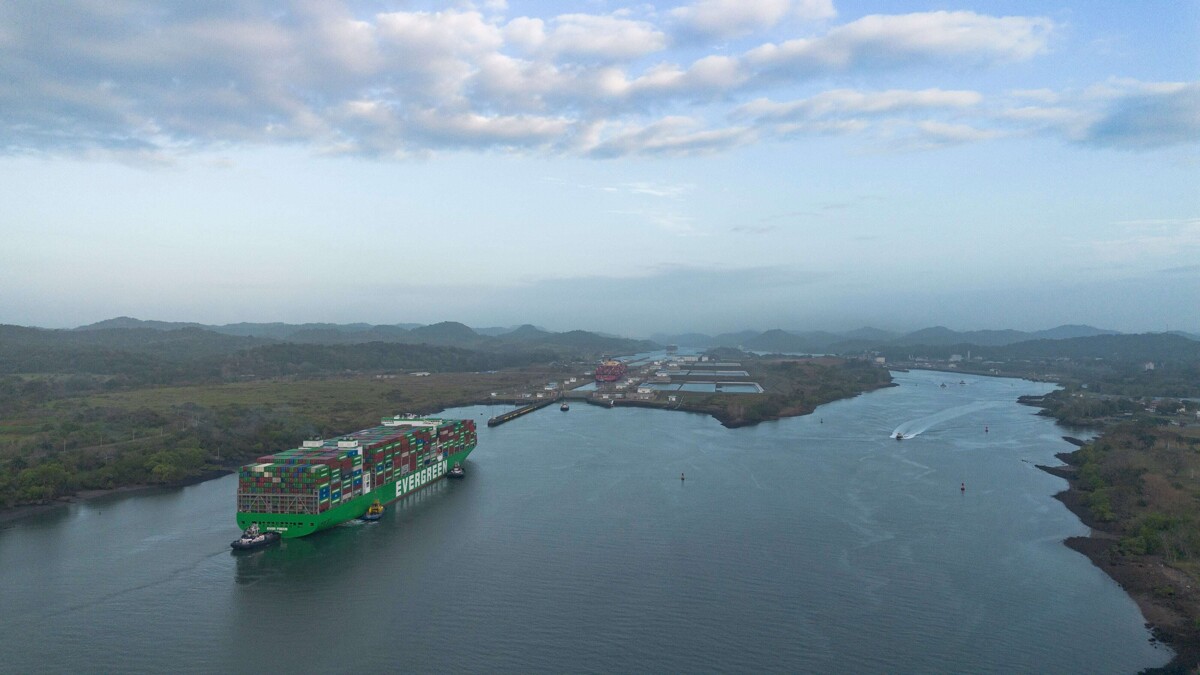
If the water management system is not improved — with new reservoirs, water-saving technologies in the locks, and above all, a citizen water culture — the economic, social, and environmental costs will continue to grow. But Panama also offers valuable lessons for all of Central America. In Panama, as in Guatemala, disordered urbanization, extensive livestock farming, and population pressure continue to erode the forests' ability to regulate water. And this is where reality forces us to be honest: Panama's water security is in danger, not from a lack of water in the abstract, but from how it has been managed socially and politically. The hydrographic basin of the Canal — especially the Gatun and Alajuela lakes — is the heart of the system. If we neglect them, no dam, no aqueduct, no free trade treaty, and no water law will save us from scarcity. In my next article, I will analyze the lessons that water management in Panama holds for Guatemala and Central America. The author is a chemical engineer with a specialization in mathematics. Because the Panama Canal is not only a masterpiece of engineering; it is the clearest example of how society modifies the water cycle and, at the same time, depends completely on it. In the previous installment, we recalled how nature, with its geological and biological wisdom, turned the Isthmus of Panama into a living bridge between North and South America, and how orographic rainfall became the engine that fills this small but prodigious territory with fresh water. It is a living demonstration that the water cycle is no longer just natural: it is social. We also saw how the bold human engineering of the early 20th century — by damming the Chagres River and creating Gatun Lake — radically transformed the natural water cycle into a socio-natural cycle, as I call it in my book 'The Social Nature of the Water Cycle'. That intervention brought global progress and connectivity, but also a price: destruction of habitat and ecosystems, loss of water capacity for the population, and prioritization of the canal, which created the permanent need to care for the basins to 'produce' more water and prevent the system from collapsing. Today, in this second part, I want to look at the present and the immediate future. And when management is fragmented, the resource suffers. But Panama's problem is not the absence of a water law, as Luis Credidio points out in his column in La Prensa: 'Panamá already has a legal framework — although many may argue that it is inefficient — regarding the conservation of the water resource, channeled through institutions such as the Ministry of the Environment, the Institute of Aqueducts and Sewers, and the Water Resources Authority of Panama (ARAP). The first is that no major engineering work is sustainable if the social nature of the water cycle is not understood and cared for. Water does not understand institutional borders; it flows through basins. This means that there is no legal vacuum, but an operational inability to retain and distribute water throughout the country'. Third, climate change is no longer a future threat: it is the new normal. These are challenges we also face here in Guatemala, challenges that we have diagnosed time and again and that it is time to face. First, deforestation in the upper basins remains an open wound. To this is added the depredation of trees caused by monocultures and mining activities, a problem we share with Panama. Certainly, there are Panamanian organizations such as Natura that have advanced in reforestation — in the last ten years, more forest cover has been recovered than is lost — but common problems persist. Society decided, more than a century ago, that the Canal would be the engine of the world economy. Guatemala, Honduras, El Salvador, Costa Rica, and Nicaragua share the same reality: our basins are the true 'canal' of the region. A healthy forest infiltrates, retains, and releases water during the dry season; a deforested terrain lets it escape quickly, causing floods in winter and scarcity in summer. Second, governance. The Panama Canal Authority (ACP) had to make unprecedented decisions: limit transits to 22 per day, reduce the draft of the ships, and at times, prioritize water for human consumption for over 50% of the Panamanian population over global trade. This is not just a technical problem. But that decision brought with it a permanent competition for uses: water for ships, water for drinking, water for agriculture, and water for ecosystems. In Quetzaltenango, Guatemala's second city, open-pit mines are depredating the mountains of Palajunoj and Siete Orejas before the astonished gaze of citizens, who are not even able to say a word. Panama has excellent plans on paper — the National Water Security Plan 2015-2050, the Integrated Water Resources Management Action Plan (PAGIRH), and the recent National Drought Plan — but coordination between the ACP, the Ministry of the Environment, local authorities, and communities remains a challenge. Each ship that crosses the locks consumes about 200 million liters of fresh water, which is then discharged into the ocean. And when drought arrives — increasingly frequent due to climate change — that competition becomes conflict. The challenges facing our Panamanian brothers are clear and urgent. The water levels in Gatun Lake hit historical lows. That water does not return to the cycle; it is 'lost' and becomes part of another cycle. Under normal conditions, the Canal operates with 36 to 38 daily transits. But in 2023, the third driest year on record, the El Niño phenomenon and climate variability drastically reduced rainfall. Scientific models indicate that droughts like the 2023-2024 one will be more frequent and intense. He currently directs the Institute of Engineering Research at the University of San Carlos in Quetzaltenango.