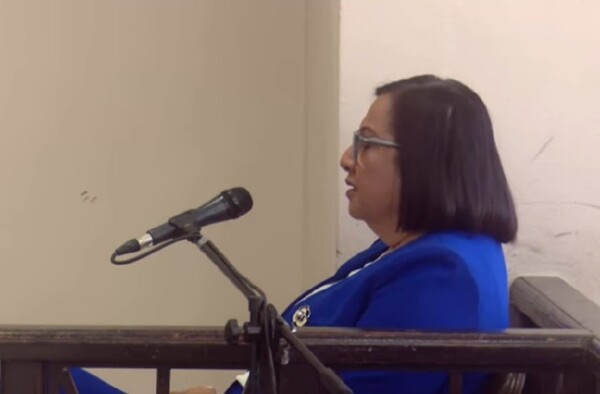
Engineer Itzel Torres, a women's rights defender, stated that the public registry of sex offenders, despite its historical significance, should not be presented as a guarantee of real protection.
Torres recalled that women's movements have been advocating for the creation of this registry for over two decades, but she emphasized that its effectiveness will depend on the responsible handling of information and the types of offenders included. "It is not a law that directly protects women, nor a mechanism of shame or revenge. It is a tool that could help, but it all depends on how it is applied," she stated.
A registry that does not address the root of the problem The activist insisted that most sex offenders come from the victim's own family environment—partners, fathers, stepfathers—and that the public registry does not change this reality. "It doesn't mean I won't be assaulted anymore because the others are still at large. But that doesn't prevent new abuses."
A useful but limited tool Torres avoided classifying the law as good or bad and underscored her position: it is necessary but insufficient. "It must be examined closely."
She also reiterated her call to toughen penalties for sex offenders, warning that current consequences are not a strong enough deterrent.
Retroactivity: an open debate Regarding the inclusion of those convicted before the law was passed, Torres described the discussion as complex. "It depends on whether you look at it from the victim's or the perpetrator's perspective. If they have already served their sentence, we must evaluate how fair it is to apply new consequences," she highlighted.
Social and labor risks The women's rights defender warned about collateral effects for the families of those who appear on the registry, especially for women, and stressed that the regulation may create a false sense of security that does not necessarily translate into prevention.
Nevertheless, she acknowledged that the list will facilitate background checks in schools, nurseries, and other sensitive environments. "That is a positive aspect: it will be possible to verify if someone has been convicted for serious crimes."