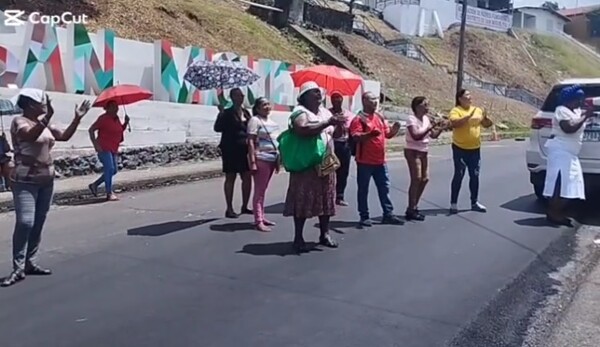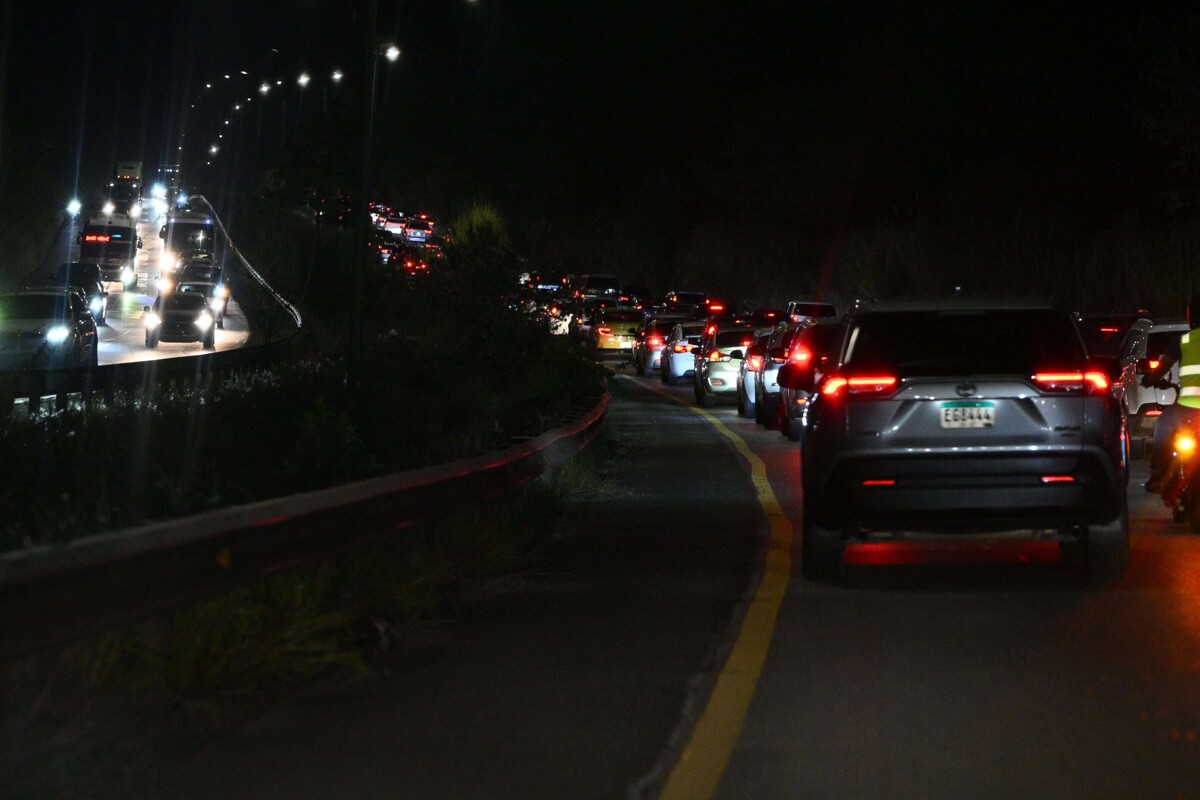
With escape routes cut off and access blocked by fire and fear, West Panama was left adrift. What was experienced yesterday was not a fortuitous accident, but the logical consequence of an exponential growth that has prioritized other objectives over citizen well-being. Today's West Panama is the result of a planning that forgot that movement is vital for the survival of a community. West Panama has screamed through the fire, and its demand is clear: dignity, mobility, and, above all, the certainty that going home will not be a race against tragedy. The author is a student of the Master's in Land Planning for Sustainable Development at the University of Panama. We are at a new stage for West Panama, where the integration of high-capacity mass transit systems, the strengthening of local logistics nodes, and the creation of strategic alternate routes stop being paper projects and become tangible realities. This moment marks a turning point where citizen resilience transforms into a constructive demand, forcing us to look towards a future where Metro Line 3, the new bridge over the Canal, and regional interconnectivity are the pillars of a modern province. Such an event was the perfect metaphor for an infrastructure that has reached its boiling point: a system that can no longer withstand more pressure and ends up resonating in the minds of those who only seek to reach their destination. The dependence on the Bridge of the Americas and the Centennial Bridge demonstrates that these are the main communication arteries of West Panama and other provinces, but at the same time, they represent their greatest weaknesses. The province demands a road network that does not surrender at the first setback, that offers effective emergency exits, and that stops punishing citizens with hours of life lost in the forced sedentarity of the steering wheel. Today, citizen consciousness is more awake than ever, and that energy is the engine to drive an integral urban design. This fragility is the result of years of ignoring that a province is not built only with residential areas, but also with viable alternatives capable of sustaining the flow of life of its residents. It is time to understand that a province of more than 650,000 inhabitants cannot be sustained by such a thin thread. There are no secondary connections to relieve the load. Reality hit us with the same force as the blast wave from the explosion: thousands of people were left suspended in a limbo of uncertainty, watching from their vehicles as their quality of life deteriorates day by day. In an instant, the whirlwind of fire broke the monotony of daily life, reminding us of the extreme vulnerability to which we are exposed. This fact was not an isolated event; it was the trigger that exposed the total paralysis of a province. As if the weight of the daily traffic jam were not enough, yesterday's tragedy has buried the fragile stability of our routine. The collapse of the routes after the incident demonstrated that there is no 'Plan B'; there is only a collective resignation that has today become a tangible fear. The roar of April 6th is marked as an alarm that must awaken those who have the power to decide. It is not simply about expanding lanes or patching potholes; it is about comprehensive planning with contingency plans that represent real solutions.