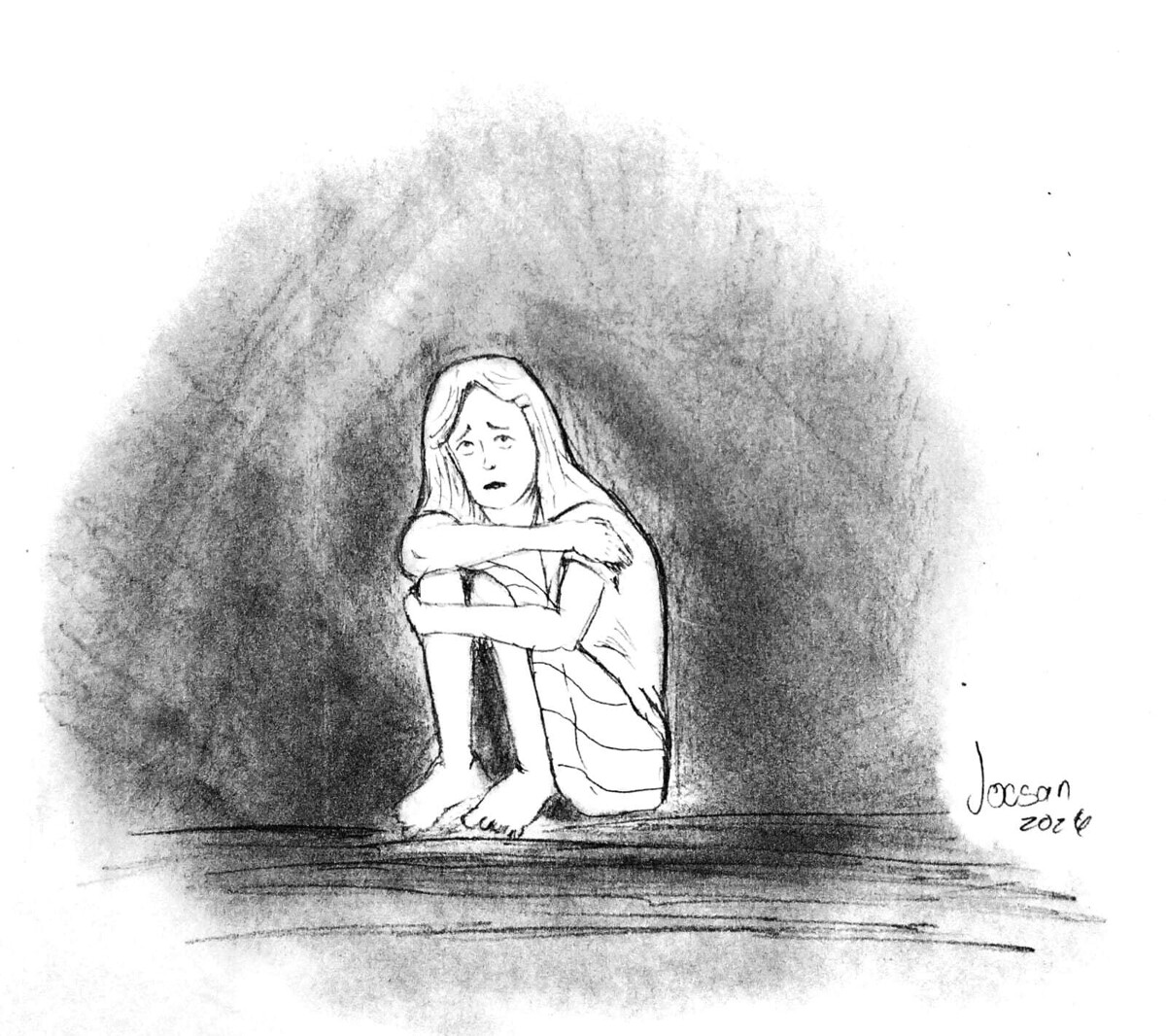
There is no clear, up-to-date, and accessible public figure. How can timely and profound decisions be guaranteed in the face of this reality? The justice that should give children a voice sometimes ends up silencing them. Why are they not heard? How is it possible for a child to be unable to express where they suffer or feel fear? A child should not feel threatened within a process that seeks to protect them. This is compounded by another concern: the continuity of certain specialists may depend on an agreement between the parties, even when there are doubts about the well-being of the minor during care. They lose their future. And when a society allows that, it loses its own. We cannot fail to mention that the perception that factors external to the child's well-being can influence these processes leaves a deep bitter taste. The author is an educator. These are experiences that must be reviewed, corrected, and overcome. In some scenarios, when a solution is not reached in family conflicts, decisions are made such as transferring children to institutional shelters, which can generate an even greater emotional impact. Situations that generate concern are also described: professional interventions that are not always perceived as safe by minors, who may feel pressured or without real space to express their will. These experiences can be deeply traumatic. Furthermore, between 2021 and 2025, more than 726,108 cases were entered and 763,258 were resolved, showing both the volume of work and the attention to accumulated files. An inevitable question then arises: how many judges are truly dedicated to handling this workload in family and childhood matters? To what extent must one go to be heard? The protection of childhood cannot wait. There must be real spaces where children can feel safe, grow without fear, and build their future with hope. We cannot allow our children to grow up trapped in environments marked by fear and uncertainty. Because a child who loses hope not only loses their present. In some cases, it is perceived that the processes can be biased and that decisions do not always respond exclusively to the best interest of the child, but can be influenced by external factors. It is not a matter of generalizing, but of recognizing that when that perception exists, trust is weakened. It is about childhood and a society that aspires to heal, but which will hardly achieve it if it does not protect in time those who need it most. There is also a perception that cannot be ignored. More than 70,000 processes correspond to family and childhood, where the security, emotional stability, and development of minors are defined. The trend is not decreasing. It impacts the health and emotional balance of those who assume these responsibilities. Because it is not just any matter. Parents invest time and resources in lawyers, but face decisions that, on occasion, do not consider warning signs and can aggravate the harm. It is not about perceptions. It is about people. There are families with resources that, in some cases, manage to influence the processes; others, with limitations, try to be heard in the middle of complex procedures. But it must also be said: on the other side there are human beings. There are silences that hurt more than any words: the silence of a child who is not heard; the silence of a girl who tries to explain where she feels fear and no one asks her, as if her pain did not matter or, worse, as if there were no interest in hearing her. In processes that should protect, situations are repeated in which justice does not advance with the necessary opportunity or depth. Justice must not only be impartial, it must seem so. There are aspects of this reality that do not always come to light, but that must also be part of this conversation. What has happened in the country in recent times in terms of childhood cannot be normalized. Every professional must act within their scope, respecting the technical criteria corresponding to each specialty. A judicial process should not give rise to interpretations that affect the emotional stability of a minor or turn professional care into an element of pressure. How can this reality be made visible? Officials, judges, and personnel working under constant pressure, with long hours and accumulated hearings, often without enough time to analyze each case with the depth it requires. This raises another question: has the need to strengthen these areas and increase personnel to handle such sensitive situations been dimensioned? Sustained pressure also has consequences. How can that voice not become the starting point of any decision? The most worrying thing is that these situations are not unknown: they are present in files and testimonies, but they do not always generate the response they require. What is truly serious happens when a case is closed without having sought the bottom of the matter. Here it is not just about numbers. Of that total, 160,920 cases entered, 156,327 were resolved, and 60,876 remained pending, reflecting the pressure on the system. It is about figures. According to reports from the Judicial Branch of Panama, in 2024 the system faced a workload of over 217,203 files. In 2025, more than 235,525 hearings were held, evidence of a sustained demand.