In its course of over four kilometers, the waterway traverses areas with intense commercial and population activity, factors that increase the pressure on the capacity of its natural and artificial drainage systems.
Infrastructure and Urban Challenges
During its journey, the water flow passes under major logistical infrastructure such as Vía José Agustín Arango and the Sur Corridor. According to authorities, citizen collaboration is a fundamental factor to preserve the effectiveness of the cleanings carried out and guarantee the safety of local residents.
The Ministry of Public Works (MOP) advances in the hydraulic recovery of La Gallinaza stream to prevent floods. For this reason, the Ministry maintains the area under permanent monitoring, classifying it as a critical point within the city's rainwater network.
Citizen Commitment and Continuity of Work
The Ministry of Public Works reaffirmed that maintenance tasks will be developed uninterruptedly. The cleaning of La Gallinaza stream seeks to optimize the drainage system in Juan Díaz.
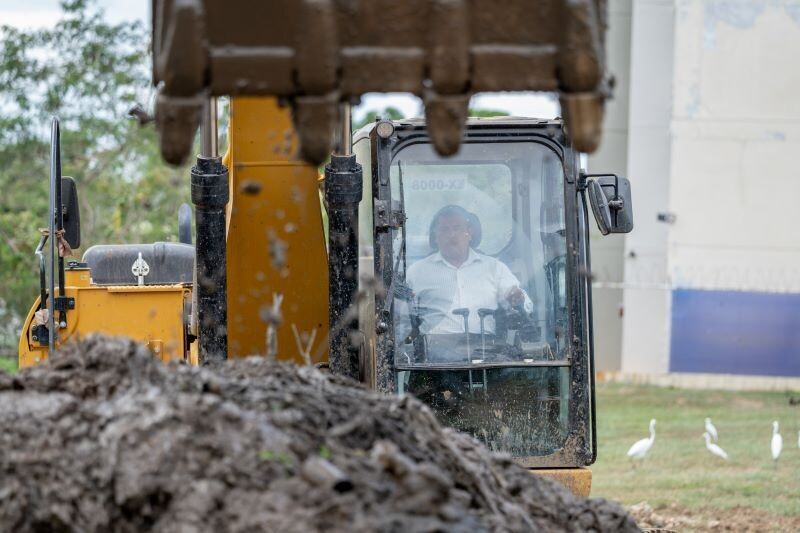
The Ministry of Public Works is executing cleaning and sediment removal tasks in over a kilometer of the La Gallinaza stream to guarantee the stormwater flow. The communities benefiting include Concepción, Ciudad Radial, La Gallinaza, and Los Robles, as well as sectors near Versalles, areas that have historically suffered the consequences of the overflow of this body of water.
The stream originates in the wooded areas situated between the Pedregal and Juan Díaz districts. It is precisely at these points where the accumulation of trash and sediments critically affects the obstruction of the channel during rainfall events.
Due to accelerated urban development and various unplanned interventions in the surrounding areas, the stream has experienced a reduction in its natural capacity. These actions are concentrated in areas where the flow of rainwater is habitually compromised, forming part of a sustained intervention at this key point of the capital's urban drainage system.
Maintenance tasks extend for a stretch of over a kilometer in length. The MOP's technical team is in charge of sediment removal, solid waste extraction, and channel reconditioning, with the direct objective of optimizing the response of the waterway and ensuring that rainwater flows adequately towards its mouth.
Risk Prevention in Vulnerable Sectors
This comprehensive strategy aims mainly to reduce the possibility of flooding and the emergence of health impacts in high-density residential areas.