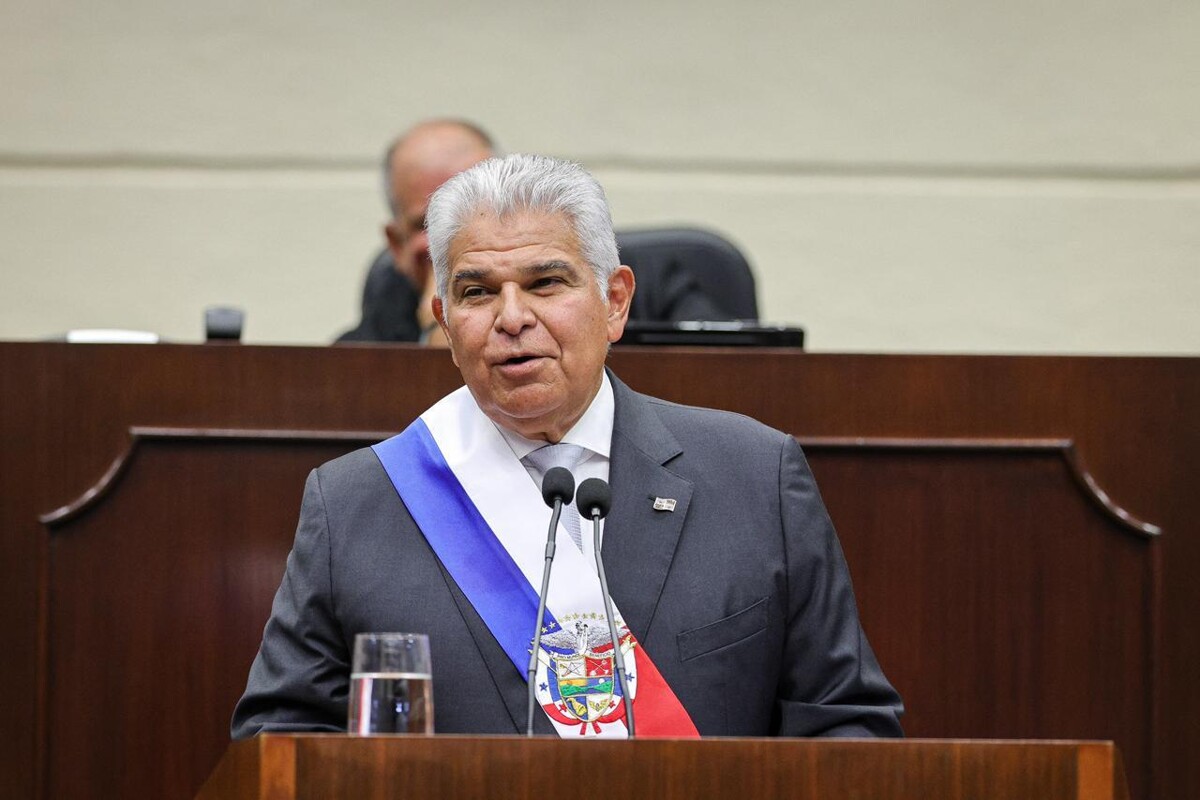
Panama and the United States maintain a relationship of respect and collaboration on strategic issues such as security, following the crisis over the Panama Canal, which continues to be 'Panamanian' despite the threat from US President Donald Trump to reclaim it, citing Chinese influence always denied by the government of this Central American country. This was stated this Friday by President José Raúl Mulino. When referring to 'the situation related' to the Canal during the traditional accountability report at the start of the year before Parliament, Mulino pointed out that 'what at one moment seemed like the end of a long period of friendship, collaboration, and reciprocity, was recomposed with tact and time, with diplomatic intelligence, without losing focus on what is truly urgent and truly important.' 'Panama has moved towards a relationship of respect, recovery of trust, joint work, and friendship. The memoranda of understanding signed have concretely strengthened the security of our nation and we have consolidated our strategic position as a nexus between the great power of the North and the powers of the South of the continent,' Mulino affirmed this Friday. In a letter addressed to Mulino last November, on the occasion of a new anniversary of Panama's independence, Trump described his Panamanian counterpart as a 'staunch friend and a valuable ally' of Washington, which was understood in this Central American country as a signal of bilateral de-escalation after the US government's diatribe against the interoceanic Canal. 'I applaud your efforts to strengthen security in our region (…) I commit to working with you to further safeguard the security of the Panama Canal, a vital pillar of trade for the United States and the world,' Trump said in the letter, disseminated by the Panamanian president himself. Mulino responded by thanking Trump for his words and stating that Panama and the United States are 'friendly, sovereign, and cooperating nations' on fundamental issues such as security, peace, and the protection of freedoms. 'The Panama Canal is in Panamanian hands and will continue to be so,' the head of state affirmed, which drew applause in the legislative hemicycle. The United States built the Canal in the early 20th century and operated it for more than eight decades, until its transfer to Panama on December 31, 1999. And the Canal has remained Panamanian, and as such, it will continue to be. The waterway is governed by a Treaty of Neutrality in effect since October 1979 and has been signed by more than 40 states and territories. The administration of the waterway connecting the Atlantic and the Pacific faced this year the onslaught of Trump, who, alleging 'Chinese influence' over the Canal, threatened to reclaim it for his country and demanded free passage for warships, both extremes rejected by the Panamanian government. Mulino always defended that the administration of the Canal is directed solely by Panama and not by any world power, and demanded 'respect' for his country and that it not be involved in a geopolitical conflict that only concerns the United States and China. In this context, the Panamanian and American governments signed security agreements that have multiplied joint exercises in this Central American country, which initially generated some controversy in Panama due to the increase in the temporary and rotational US military presence. 'With the United States, we actively collaborate in the fight against international crime.'